

MindReach


Exploration
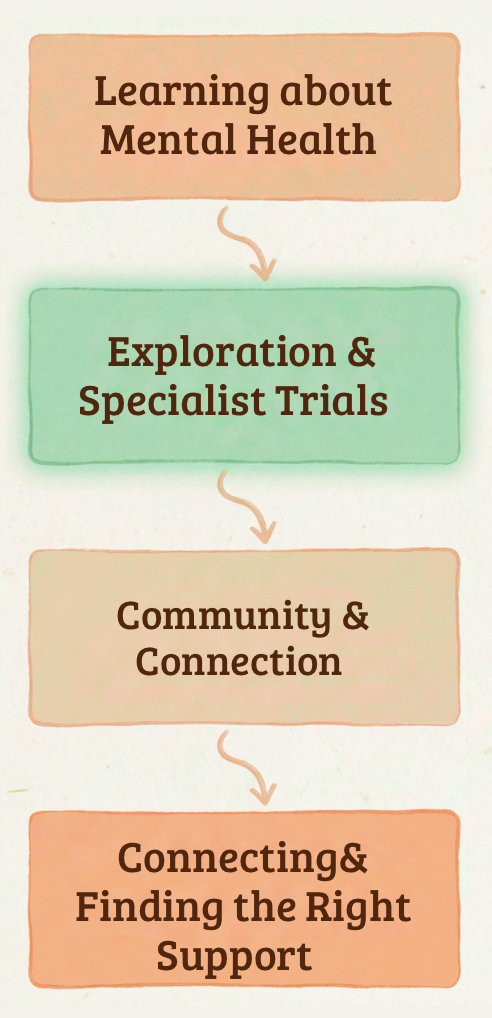
During my educational journey I learned about mental health and how some people tend to struggle to find a therapist. This is due to many factors such as lack of education about mental health, not having a sense of belonging and systematic challenges struggles that monitory groups face.
MindReach
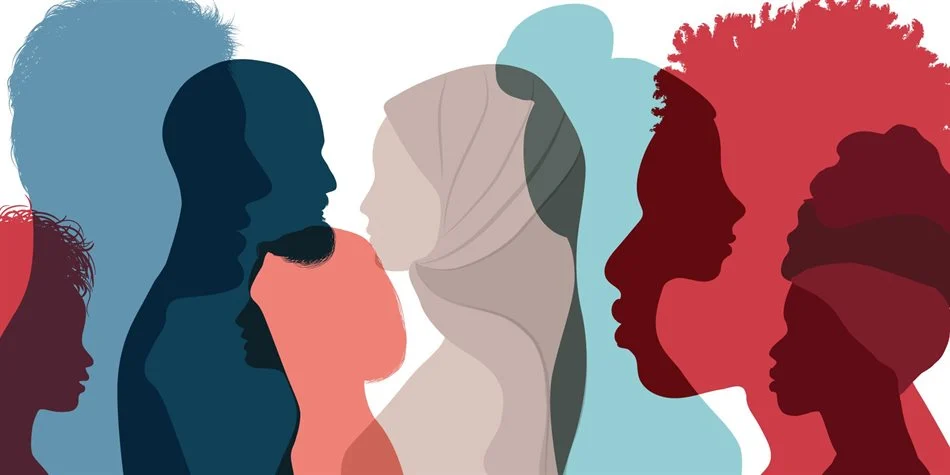
“It’s hard to connect with others I feel like having people who are similar to you can make people feel like they belong”
“It feels like they’re following a checklist instead of actually listening”
During interviews, I learned insight about why people feel that find it hard to understand what they need and how to find the right support for them.
How can ReachMind be different from apps that already exist?
Apps such as BetterHelp and Talkspace which match users with therapists through a questionnaire and aim to make communication flexible. But they do not offer people with a therapist or an opportunity to find a community that they can feel comfortable and build a connection with.
Many times all the choices that these apps provide tend to make users overwhelmed and like they have just randomly been assigned someone and not understanding what they need.
Prototypes & Designs

In my design of MindReach, I aim for redesigning therapist matching to make the process easier and on reducing anxiety and improving emotional compatibility. Instead of overwhelming users with options, the system guides them through a structured selection process, offers short trial sessions and adapts recommendations based on user feedback.
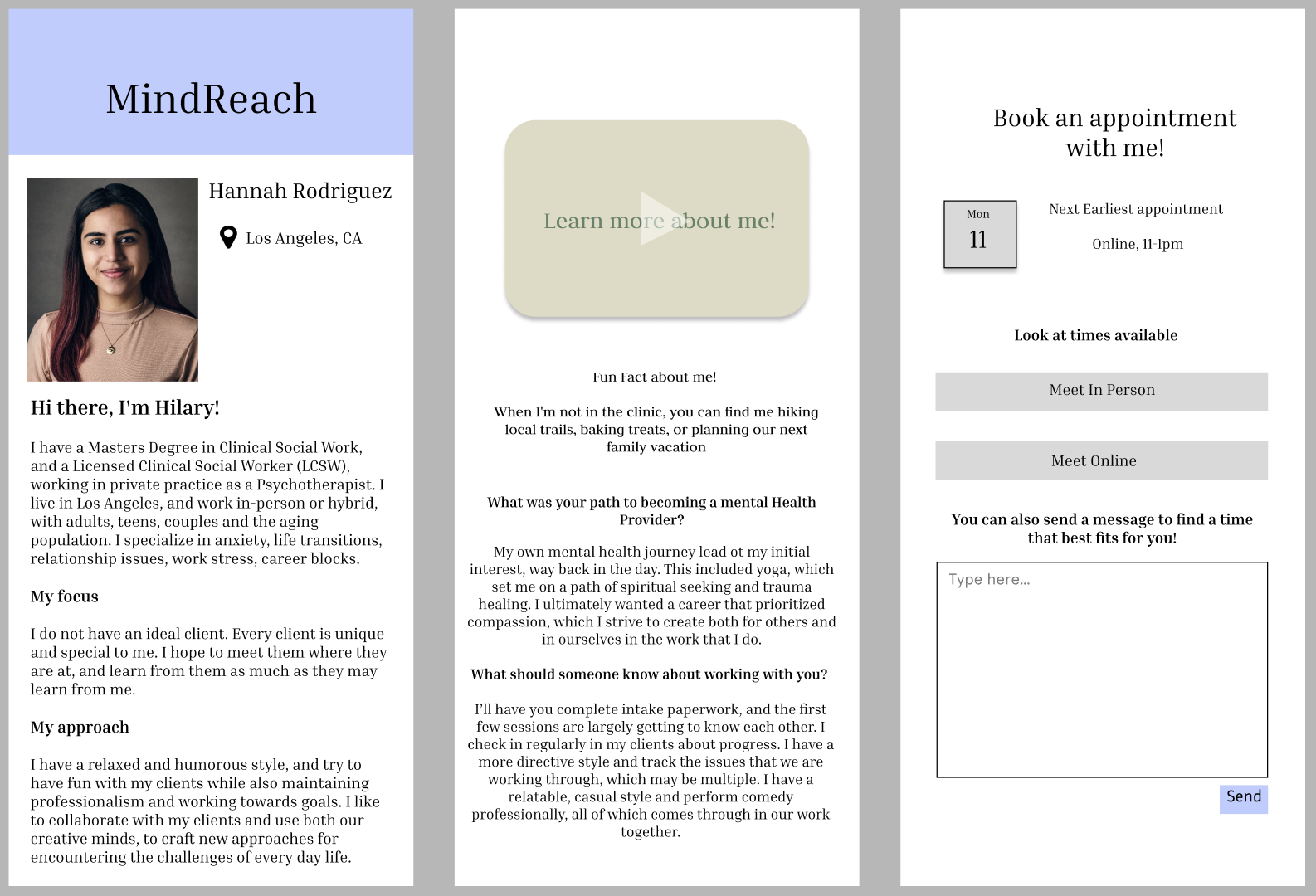
Prototype 1 aimed for giving information to the patient about the therapist and the kinds of specialist that they have
Also included an extra by helping people schedule a meeting quick and easy
Development
After running a second round of interviews, these are coming concerns that interviewees expressed:
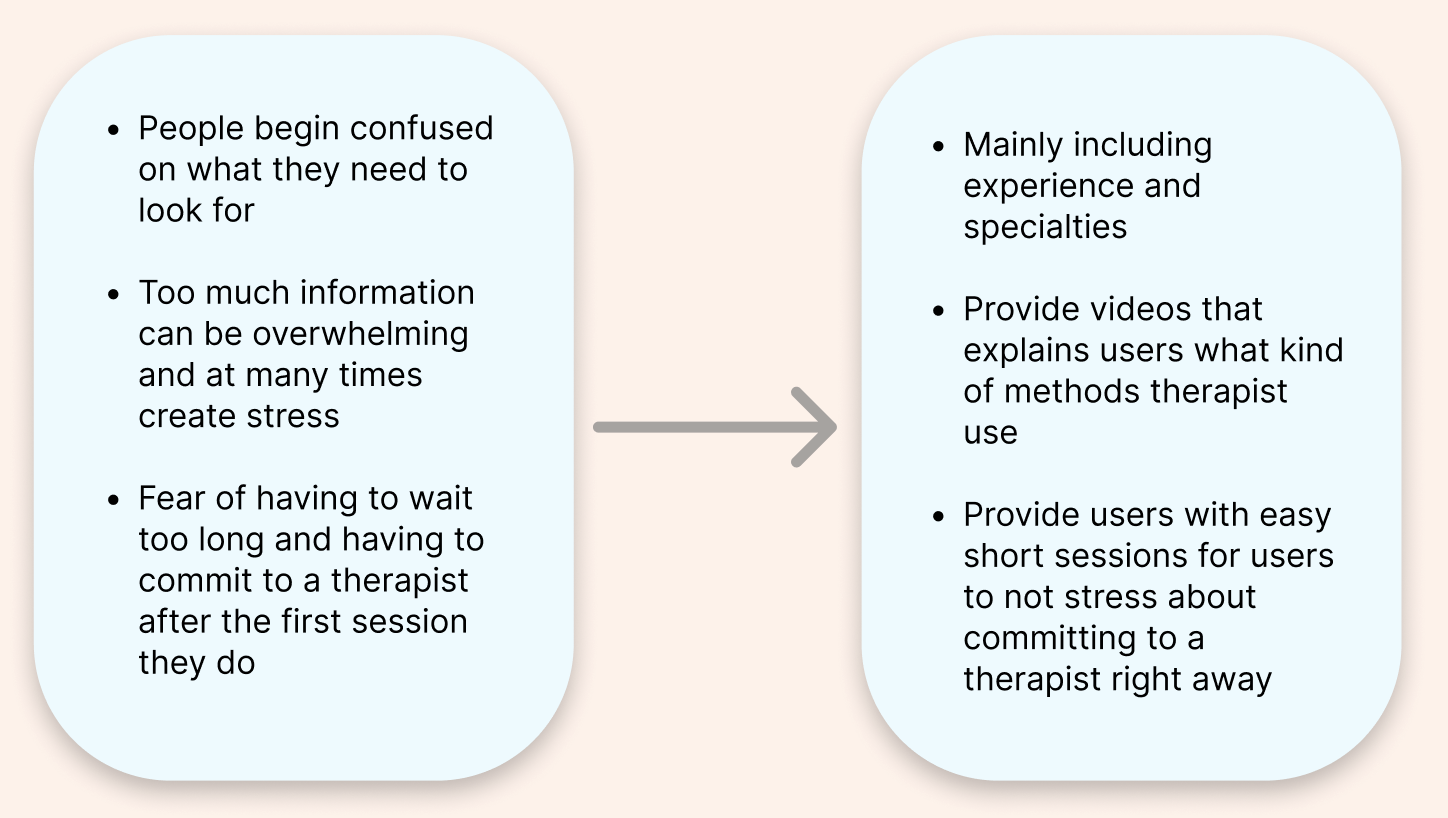
Having a lot of information make them feel overwhelmed and many times they don’t understand what they need
“It’s hard to understand what I need to find for myself even with a lot of information”
It might take people long to find a therapist still if they need to wait weeks for an appointment
So to address these and improve the prototype a different kind of strategy was used to:
Strategy
Users can view therapist introductions and backgrounds (without compromising privacy).
Start with short online sessions (15 minutes) to test compatibility.
Option to book in-person sessions after establishing trust.
Flexible subscription model with a set number of sessions per month.
Users can stop sessions anytime without penalty.
Why 15-minute sessions first? → Reduces risk, saves time/money, encourages exploration.
Why show therapist background? → Builds trust, helps connection, improves matching.
Why start online before in-person? → Safety, flexibility, lower commitment
Therapists also share on their profiles short intro videos in which they explain how they work which gives people a sense of tone and presence visible. Instead of having a page where people might be confused at what they should take into account.

After an initial trial session, users can decide whether to continue with their therapist. By starting with low-commitment interactions, users feel would feel more comfortable and confident transitioning into long-term care, including in-person sessions.
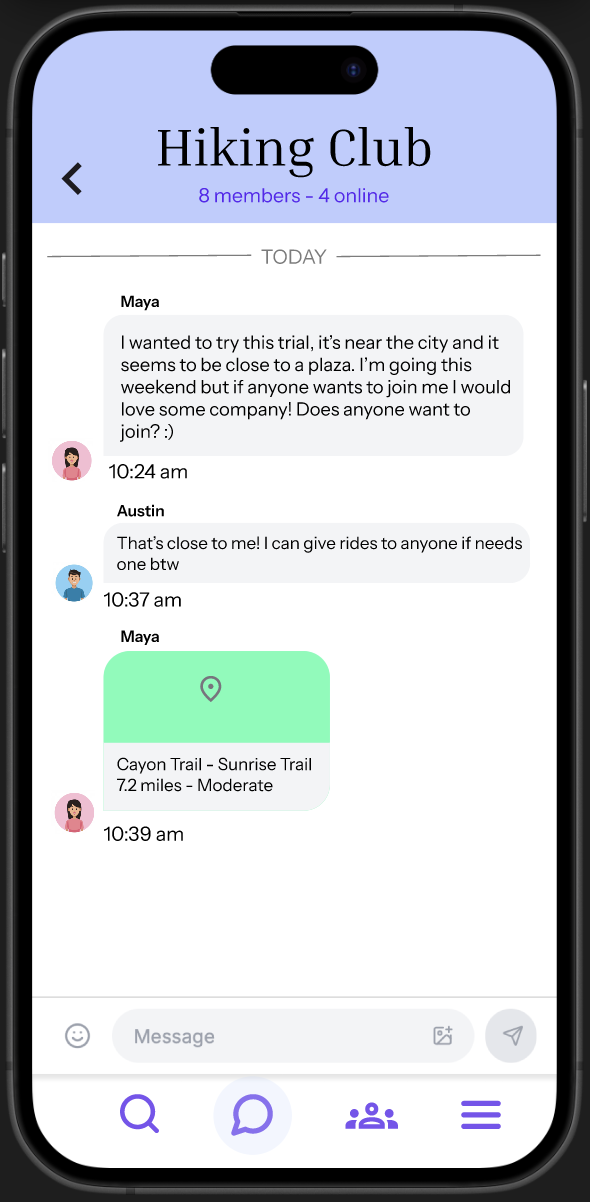
Beyond matching, the platform offers users communities to join during their mental health journey with users with common experiences. This can help them to reduce feelings of isolation and fosters a sense of support as users continue their progress.